Insurance General Ledger Integration
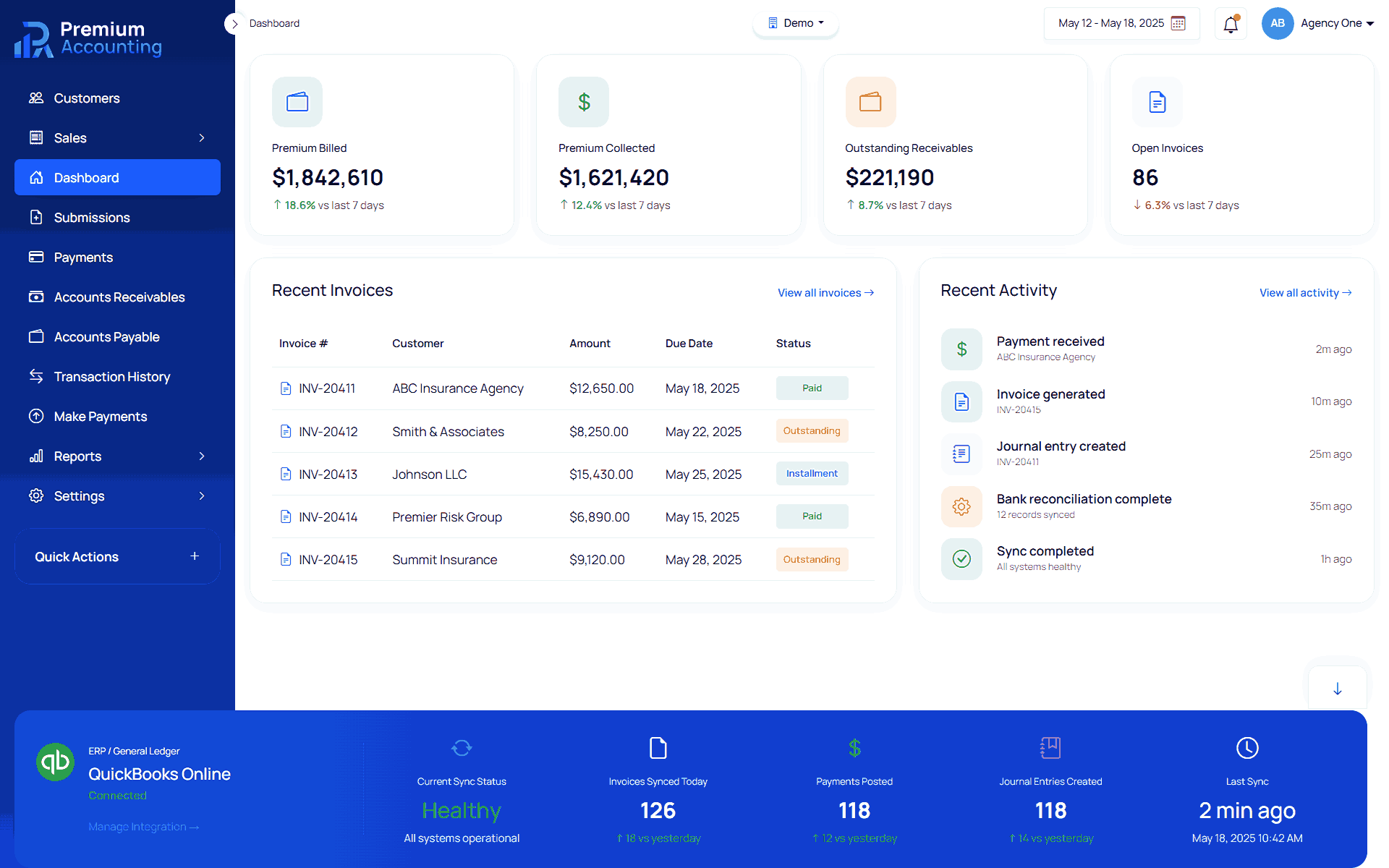
Insurance organizations should not have to choose between specialized insurance accounting and enterprise financial reporting. The best accounting architecture combines an insurance accounting platform with a proven general ledger. RemoteBooksOnline helps insurance agencies, MGAs, wholesalers and carriers integrate Premium Accounting with QBO, Xero, Sage and Workday. Premium Accounting becomes the insurance accounting subledger while your existing ERP or accounting system continues managing your corporate financial reporting. This approach eliminates duplicate data entry, reduces reconciliation work and creates a connected accounting environment across policy operations and finance. Learn more about Enterprise Insurance Accounting Outsourcing.
What Is Insurance General Ledger Integration?
Insurance General Ledger Integration is the process of synchronizing insurance accounting transactions from Premium Accounting into a financial ERP or accounting platform. Rather than entering accounting transactions twice, insurance organizations maintain policy accounting inside Premium Accounting while financial transactions flow automatically into the general ledger.
Typical synchronized accounting activity includes:
 Premium Transactions
- Accounts Receivable
- Accounts Payable
- Agency Commissions
- MGA Commissions
- Taxes
- Fees
- Journal Entries
- Financial Posting
- Accounting Balances
Learn more about Insurance Accounting Services, Insurance Accounting Platform Implementation.
Why Insurance Organizations Need a Subledger
Traditional accounting software was designed to produce financial statements.
It was not designed to manage:
- Policy Numbers
- Submission IDs
- Insurance Transactions
- Premium Line Items
- Policy Endorsements
- Renewals
- Cancellations
- Agency Commissions
- MGA Commissions
- Insurance Invoices
Premium Accounting manages insurance operations. Your ERP manages financial reporting. Together they create a complete accounting ecosystem.
Premium Accounting as the Insurance Subledger
Premium Accounting becomes the operational accounting layer.
It Manages:
- Policy Accounting
- Premium Accounting
- Policy Transactions
- Commission Accounting
- Invoice Management
- Trust Accounting
- Reconciliations
- Insurance Reporting
Your ERP continues managing:
- General Ledger
- Balance Sheet
- Income Statement
- Cash Flow
- Corporate Reporting
- Financial Consolidation
- Executive Reporting
This architecture provides the best of both systems. Learn more about PremiumAccounting.ai and how it extends insurance operations with operational accounting, API integrations, and financial reporting.
Supported General Ledger Integrations
QBO Integration
Many insurance organizations use QBO as their financial accounting platform.
RemoteBooksOnline helps integrate Premium Accounting with QBO to synchronize:
- Accounts Receivable
- Accounts Payable
- Premium Accounting
- Journal Entries
- Financial Balances
Xero Integration
Organizations using Xero can continue managing financial reporting while Premium Accounting manages insurance accounting operations.
Typical synchronized information includes:
- Accounting Transactions
- Receivables
- Payables
- Journal Entries
- Financial Reporting
Sage Integration
Premium Accounting integrates with Sage environments used by insurance organizations.
Integration supports:
- Financial Posting
- Journal Entries
- Premium Accounting
- Financial Reporting
Workday Integration
Enterprise insurance organizations using Workday can integrate Premium Accounting as the insurance accounting layer.
Synchronization supports:
- Accounting Transactions
- Financial Reporting
- Journal Entries
- Enterprise Finance
Integration Workflow
Review Current Accounting Environment
Review:
- ERP
- Chart of Accounts
- Accounting Structure
- Existing Integrations
Configure Premium Accounting
Configure:
- Policy Accounting
- Premium Accounting
- Commission Accounting
- Accounting Rules
Configure General Ledger Mapping
Map:
- Accounts
- Journal Entries
- Receivables
- Payables
- Premium Transactions
Configure Authentication
Configure secure API authentication between Premium Accounting and the ERP.
Validate Synchronization
Verify:
- Financial Balances
- Journal Entries
- Premium Transactions
- Accounting Totals
Production Deployment
Enable production synchronization. Monitor accounting activity.
Modernize Your Insurance Accounting Operations
Learn how RemoteBooksOnline can help implement Premium Accounting, streamline premium accounting workflows, and support your accounting team with ongoing insurance accounting services.
Schedule an Insurance Accounting ConsultationLearn About Premium Accounting
Benefits of Insurance General Ledger Integration
Organizations gain:
- Elimination of duplicate data entry
- Better accounting accuracy
- Reduced manual journal entries
- Faster reconciliations
- Better audit trails
- Faster month-end close
- Better executive reporting
- Improved controller visibility
- Lower accounting risk
Why RemoteBooksOnline
RemoteBooksOnline provides:
- Integration Planning
- ERP Mapping
- Chart of Accounts Review
- API Configuration
- Authentication Setup
- Testing
- Production Deployment
- Accounting Validation
- Ongoing Support
Unlike implementation-only firms, our accounting professionals validate accounting results after synchronization to ensure financial accuracy. Learn more about Insurance Accounting Implementation Services.
Relationship to Financial Reporting
General Ledger Integration supports:
- Financial Statements
- Controller Reporting
- Executive Reporting
- Audit Preparation
- Month-End Close
Learn more about Insurance Financial Reporting, Insurance Month End Close.
Ready to Modernize Your Insurance Accounting?
Whether you're evaluating Premium Accounting, replacing manual spreadsheets, improving reconciliations, or looking for ongoing insurance accounting support, our specialists are ready to help.
Schedule an Insurance Accounting ConsultationBrowse Insurance Accounting Resources

Remote Books Online is an
for






Insurance Native
Financial Workflows

End-to-End
Implementation

Training & Ongoing
Support

Accurate, Compliant &
Audit-Ready
Frequently Asked Questions
A subledger manages insurance-specific accounting such as policy transactions, premiums, commissions and invoices before synchronizing summarized accounting activity with the general ledger.
Most ERP systems were designed for corporate accounting, not insurance operations. Premium Accounting manages insurance-specific workflows while the ERP remains the financial system of record.
Current supported integrations include: QBO, Xero, Sage, Workday.
Organizations typically synchronize: journal entries, accounts receivable, accounts payable, premium accounting, financial balances.
Yes. We configure authentication, mapping, validation, testing and production deployment.
Yes. RemoteBooksOnline provides ongoing accounting operations after implementation to ensure synchronized accounting remains accurate.
Yes. Automated synchronization reduces manual journal entries, improves reconciliation and accelerates financial close.